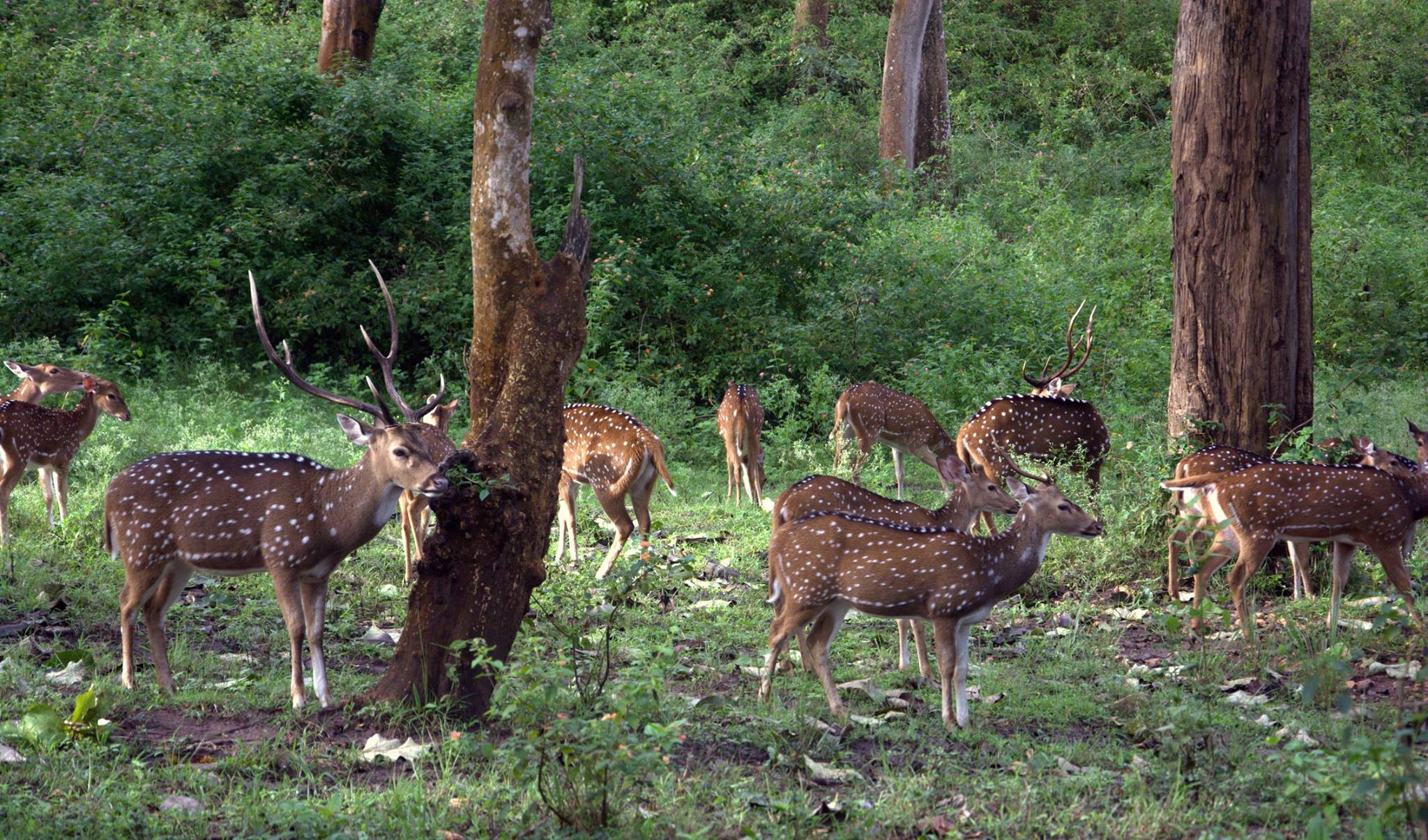
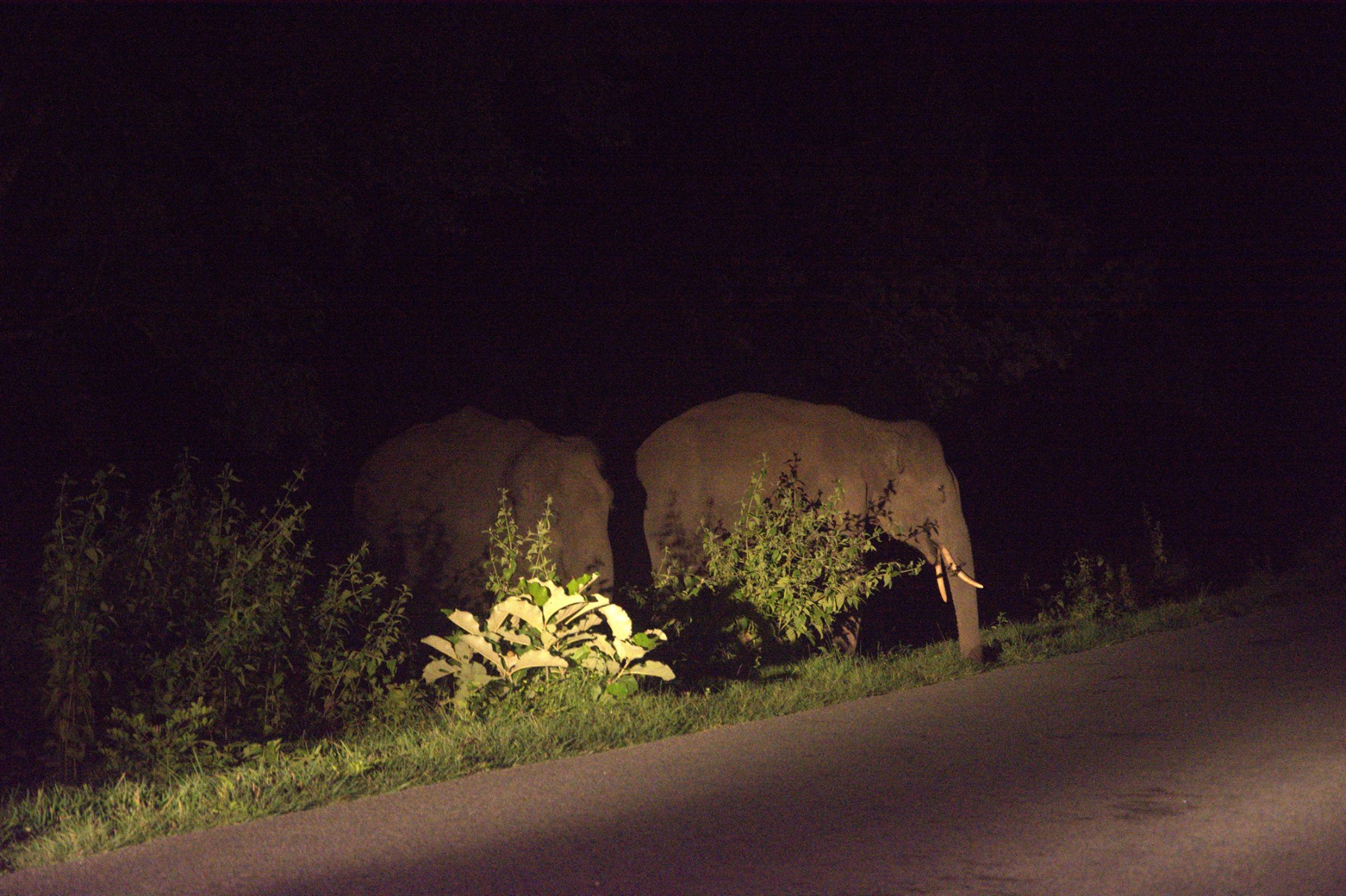
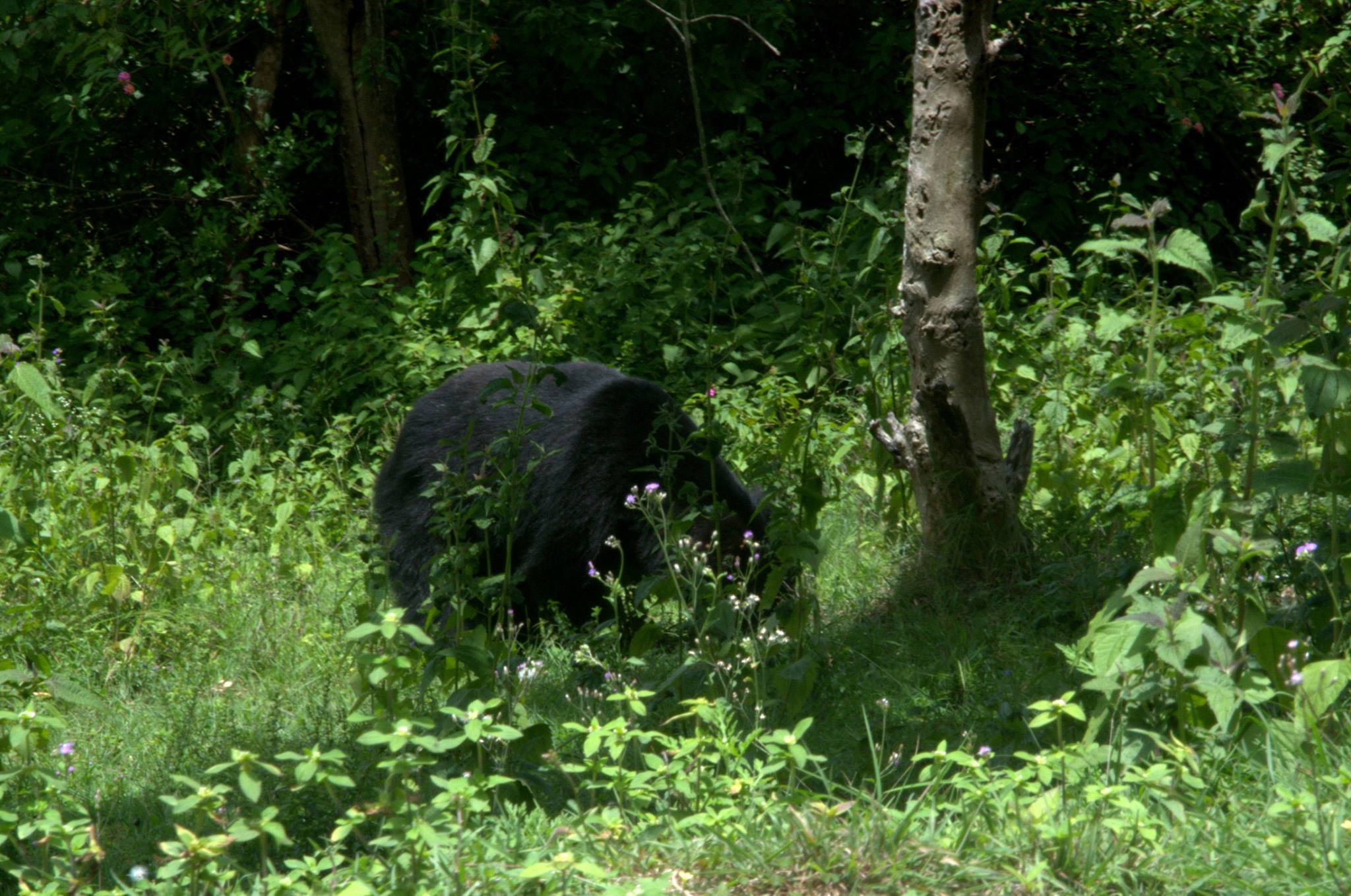
Karnataka is a South Indian State with a rich diversity of flora and fauna. It has a forest area of 43,356.95 sq. kms. Still Many parts of Karnataka are remaining unexplored. The mountains of Western Ghats are a biodiversity hotspot. Wildlife Protection Act was enacted during 1972 by Government of India to protect wild animals, birds and plants and with a view to ensuring the ecological and environmental security of the country. Animals like Tigers, Bears, Leopard, Elephant, Dhole, Giant squirrel, Gaur, wild boars are majorly found here.
The elephant population in India is around 25,000 of which the estimated population in Karnataka is around 5590(Census 2010), which constitutes about 22% of the total population.
|
Tiger (sq km) |
Leopard (sq km) |
Dhole (sq km) |
Bear (sq km) |
Chital (sq km) |
Wild Pig (sq km) |
Sambar deer (sq km) |
Tiger numbers |
|
18715 |
20506 |
15862 |
20749 |
42349 |
21999 |
43412 |
290 |
Karnataka has shown a prominent wildlife conservation drive since last decade.
The state consists of following National parks and Tiger reserves:-
National Parks:-
|
Name of the National Parks |
Distance from Bangalore(Kms) |
Season to Visit |
| Anshi National Park |
580 |
Nov-Jun |
| Bandipur National Park |
218 |
Jun-Oct |
| Bannerghatta National Park |
22 |
All Seasons |
| Kudremukha National Park |
263 |
Dec-May |
| Nagarahole National Park |
240 |
Sept.-Mar |
Tiger reserves:-
|
Name of the Tiger Reserve |
Area (sq. kms) |
Year of Establishment |
|
Bandipur |
870 |
1973 |
|
Bhadra |
492 |
1998 |
|
Nagarahole |
643 |
2000 |
|
Dandeli-Anshi |
475 |
2006 |
|
BRT |
539.52 |
2011 |
Karnataka has a biosphere reserve as well.
|
Name of the Reserve |
Area (Sq.kms) |
Year of Establishment |
|
Nilgiri |
2053.27 |
1986 |
It has a numerous number of sanctuaries as well; of them the following are popular.
|
Name of the Sanctuary |
Area (sq.km) |
Season to Visit |
|
BRT Wildlife Sanctuary |
539.52 |
Oct-May |
|
Bhadra Wildlife Sanctuary |
500.16 |
Sept.- Mar |
|
Brahmagiri Wildlife Sanctuary |
181.29 |
Jan-Mar |
|
Cauvery Wildlife Sanctuary |
1027.53 |
May-Nov |
|
Dandeli Wildlife Sanctuary |
886.41 |
Sep.-May |
|
Mookambika Wildlife Sanctuary |
370.37 |
Nov.-Apr. |
|
Pushpagiri Wildlife Sanctuary |
102.59 |
Jan.-Mar |
|
Ranibennur Blackbuck Sanctuary |
119.00 |
May – Jan |
|
Sharavathi Wildlife Sanctuary |
431.23 |
Nov-May |
|
Shettihalli Wildlife Sanctuary |
395.60 |
Nov.-May |
|
Someshwara Wildlife Sanctuary |
314.25 |
Nov.-Apr. |
|
Thalakaveri Wildlife Sanctuary |
105.59 |
May-Jun |
|
Bhimgad Wildlife Sanctuary |
190.42 |
Nov-Jun |
Some facts about national parks:-
Bandipur National Park:-
It is situated within Chamarajanagar district covering an area of over 800 km² and adjoins the states of Tamil Nadu and Kerala. In 1973, Bandipur became one of the first of India’s Tiger Reserves and became a part of Project Tiger. In 1974, intention was declared as a National Park.
Animals found here:-Indian Elephant, Gaur, Sambar, Chital, Red giant flying squirrel, Small Indian Civet, Sloth Bear, Barking deer, Mouse deer, Bengal Tiger, Indian Leopard, smooth coated Otter, Dhole, Striped Hyena, Golden fox, Indian pangolin, Starred tortoise, Common Indian Monitor lizard, Indian Chameleon, Common Rat snake, Indian Cobra, Russell’s Viper, Indian Python, Green Whip snake, Trinket Snake e.t.c.
Kudremukha National Park:-
Spread over an area of 600.32 km² it encompasses regions in the districts of Dakshina Kannada, Udupi and Chikmagalur. Altitude varies from 134 meters (440 ft) to 1,892 meters (6,207 ft). The park has a pleasant climate, with temperatures ranging from 17° to 28 °C. Annual rainfall varies from 1,778 millimeters (70 in) to 6,350 millimeters (250 in), with an average of 4,000 millimeters (157 in). The rivers Nethravati, Tunga andBhadra are believed to originate here at Ganga Moola.
Animals found here:-Bengal Tiger, Indian Leopard, Dhole, Golden jackal, Lion-tailed Macaque, Common Langur, Sloth Bear, Gaur,Sambar, spotted deer, barking deer, Malabar Giant Squirrel, Indian Giant Flying Squirrel, Indian Crested Porcupine, Monitor lizard, Indian Chameleon, Common Rat snake, Indian Cobra e.t.c.
Nagarahole National Park:-
Also known as Rajiv Gandhi (Nagarahole) National Park gets its name from the Nagara Hole (Snake River in Kannada) which runs eastwards through its centre. Nagarahole River flows through the park before it joins the Kabini River that also acts as a boundary between Nagarahole and Bandipur. The park covers an area of about 575 km². The Wayanad Wildlife Sanctuary of Kerala adjoins to the Southeast.
Animals found here:-Indian Elephant, Gaur, Sambar, Chital or Spotted deer or Axis deer, Barking deer, Mouse deer, Giant fruit bat,Bengal Tiger, Indian Leopard, Leopard cat, Common palm civet, Small Indian civet, Sloth bear, Dhole or Asiatic wild dog, Flying fox, the largest Indian Bat. Reptiles include Marsh crocodile, Indian pond terrapin, Star tortoise, Common Indian monitor lizard, Southern green calotes, Geckos, Spectacled cobra, Russell’s viper, Common krait, Indian python, Checkered keelback, Green whip snake, Common Indian bronzeback, Flying snake, Wolf snake and Trinket snake.
Bhadra Wildlife Sanctuary:-
The nearest town to Bhadra Wildlife Sanctuary is Chikmagalur, which is at a distance of about 38 Km. It has turned out to be a great excursion option for tourists in Chikmagalur district. One gets to see huge variety of flora and fauna in an area of 492 sq. Km, which the sanctuary covers. It was named as Jagara Valley Game reserve in 1974. And in the year 1988, it was reinstated as Bhadra Wildlife Sanctuary
Animals found here:-Tigers, leopards, elephants, gaur and sloth bear.
Below are few threats for wildlife conservations:-
Poaching, Habitat destruction, Human–wildlife conflict, Human–wildlife conflict, and Human–wildlife conflict. The reports of threats can be found in the following link. http://conservationthreats.org/reports
Endangered Animals in Karnataka:-
Bengal Tiger, Indian Leopard, Indian Elephant, Black buck; Lion tailed Macaque, Olive ridley Turtle, Dhole, Kolar leaf nosed BAT.