
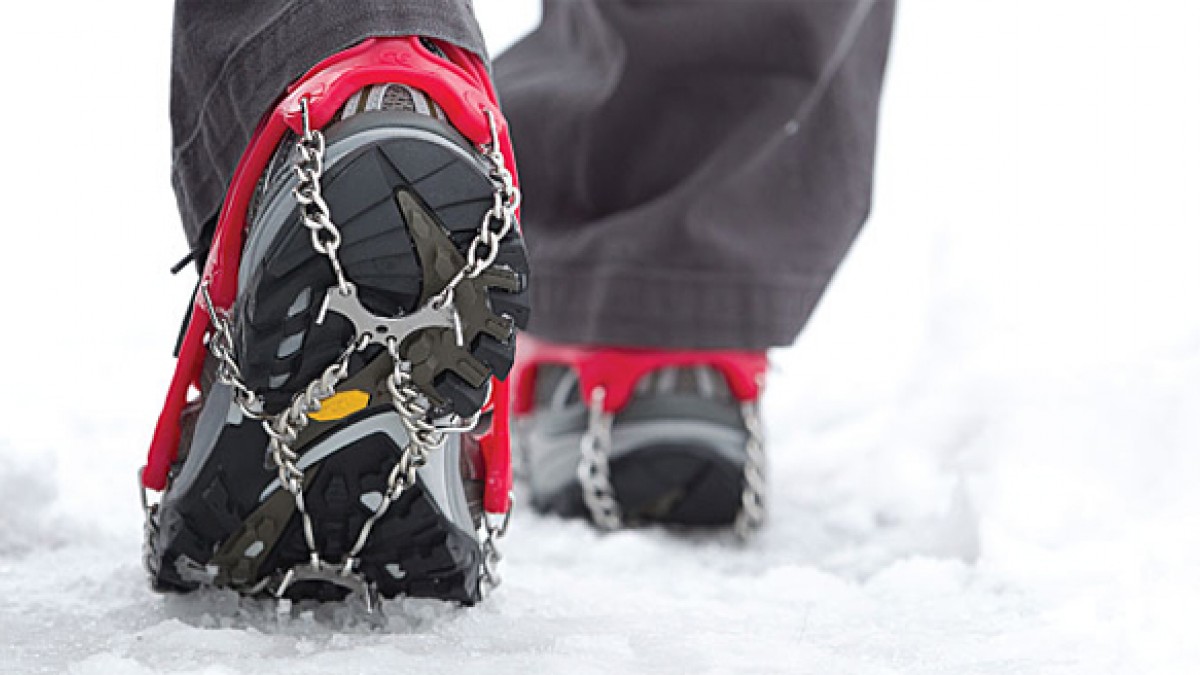
Flexible, or “hinged,” or walking crampon or micro spikes or anti-slip or ice gripper, many names to call the recently introduced ice gears of outdoor adventure sports. Flexible crampons are best for climbing snow and walking on glaciers. They are designed to flex with the boot, making walking more natural. If you plan on more hiking than technical climbing, flexible crampons will really shine. New age products are evolving more and almost developing a new category of ice traction gear for a more generic ice walk. Soon we may have to stop calling it crampon as it looses the technical seriousness.
What is a crampon?
Walking on the hard sheet of ice required specific gears and techniques. The gear used to get a grip on ice called crampon. The word Crampon in dictionary describes a metal plate with spikes fixed to a boot for walking on ice. The metal teeth of it create bite on ice to generate traction. Oscar Eckenstein designed the first 10-point crampon in 1908, dramatically reducing the need for step cutting techniques of mountaineering to climb hard ice. Till now the science of making a crampon has already traveled a long way of design evolution. Now you can classify them into 3 categories;
| Crampon / boot compatibility | |||||
| Crampon | Use | B0 boot (flexible) | B1 boot (semi-stiff) | B2 boot (fully stiff) | B3 boot (technical climbing boot) |
| C1 | relatively flexible walking crampon | No | Yes | Yes | Yes |
| C2 | versatile crampon for both walking and mountaineering | No | No | Yes | Yes |
| C3 | technical mountaineering crampon | No | No | No | Yes |
Where do the microspikes fit in the above categories?
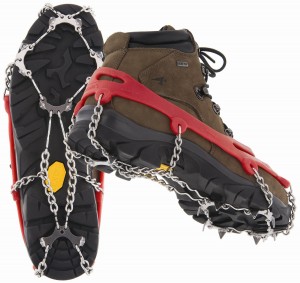
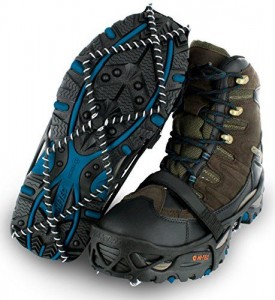
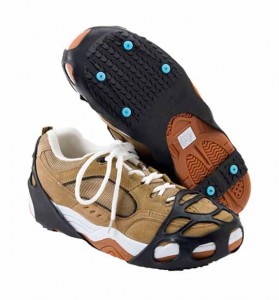
A lot of ice traction products are designed to support a more generic walk on ice or compact snow. Those may have 6 or even less number of spikes or completely different design to generate traction over snow. Though current days of microspike possess a few differences over flexible crampon, but still it is the best fit in the C1 walking crampon category.
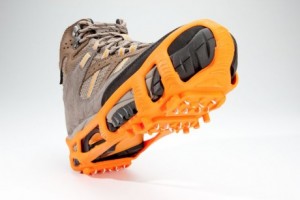
Rigid crampon Vs microspikes for Trekking
For a winter trek like the Chadar trek, a grade C1 crampon is good enough which fits with a decent trekking shoe with semi-stiffness. Also, it has some pros & cons over rigid crampon of C2& C3 type;
Pros
- Easy to put on & out
- Fits on a vivid range of boots with semi-stiffness.
- Missing horizontal front teeth reduces the chance of injury for new users.
- Lightweight & compact to carry.
- Reasonably priced
Cons
- Largest size is still a bit small for a size 11 & above boot
- Some clumping of snow underneath at an extremely low-temperature range.
Choice of your walking crampon:
These walking C1 crampons are available now with various designs and brands. Any day I will prefer to go for I a classic steel teeth design with due respect to the designer and science of traction other mechanisms. Because for a good trek , I don’t want to miss the bite of steel teeth on packed snow or ice. I feel while buying or using it I will prefer to look a few aspects of design;
- No of the spikes: More no of spikes or teeth will definitely provide more grip. A well-designed flexible crampon normally offers 10 spikes in each pair. 2 horizontal points are missing in compared to rigid C2 & C3 12 points crampons.
- The build quality of spikes: Build of the spikes and depth is also proportional to the traction it generates. A deeper one made of better steel will provide stronger grip and last long.
- The distribution of spikes: The spikes should be well distributed over sole. It should offer good traction at the both end of the shoe in a balanced manner.
- The stretchability of rubber/ silicon in use: Quality of rubber/ silicon should be an important point to check. Most of this crampon come with flexible size and non-adjustable design. The rubber used to make it offers a great stretchability to fit in any size of shoes. Once stretched to a particular size it tries to retain the size. Better and softer quality of rubber will increase its life span and hold it to tear from the stretched position.
- IT IS CRITICAL THAT YOU TEST YOUR CRAMPONS ON YOUR BOOTS BEFORE YOU BUY or FINAL USE.

Protection of your walking crampon:
There are majorly 2 ways you can damage your walking crampon during winter trek;
- Damage of sharp teeth: These crampons are strictly build to walk on ice. Not at all on the rock surface. While walking on snow covered rock or directly on the rock, it is recommended to remove it from the shoe. This will definitely damage your sharp spikes of crampon and make it useless. Also, it may result in you a fall. So during a trek, don’t forget to remove it on rocky terrain.
- Tear on rubber or silicon strap: The winter Himalayan trek offers extreme cold up to -25 degrees C during the night and a little warmer day. More cold will make the rubber much harder.The rubber strap of crampon looses it’s stretchability in proportion with cold and create tears. Also it difficult to keep it warm during winter climate. So whenever you are going to wear it at the beginning of the day, check it’s firmness and if possible expose it to sunlight for a while. If you already get a tear, treat it with care.
Different well rate Brands for flexible crampon:
Availability of micro spikes in India:
Online shopping portals are making these products available nowadays in India. But problems are;
- Inconsistent availability
- Lacks of good brand or quality product
- Cheaper ones are significantly less durable.